EPR Plastic Waste Registration in India: Complete CPCB Compliance Guide (2026)
India’s No. 1 Registration and Compliance Service Provider
✓ India’s #1 Experts in CPCB EPR Registration
✓ Quick Issuance of EPR Certificate for Import
✓ Full Guidance on EPR Rules & Applicability
✓ Monthly & Annual Compliance Management
✓ Support for EPR Target Fulfillment & Credits
✓ Stay Updated with Latest EPR Regulations
Table of Contents
EPR Registration For Plastic Waste
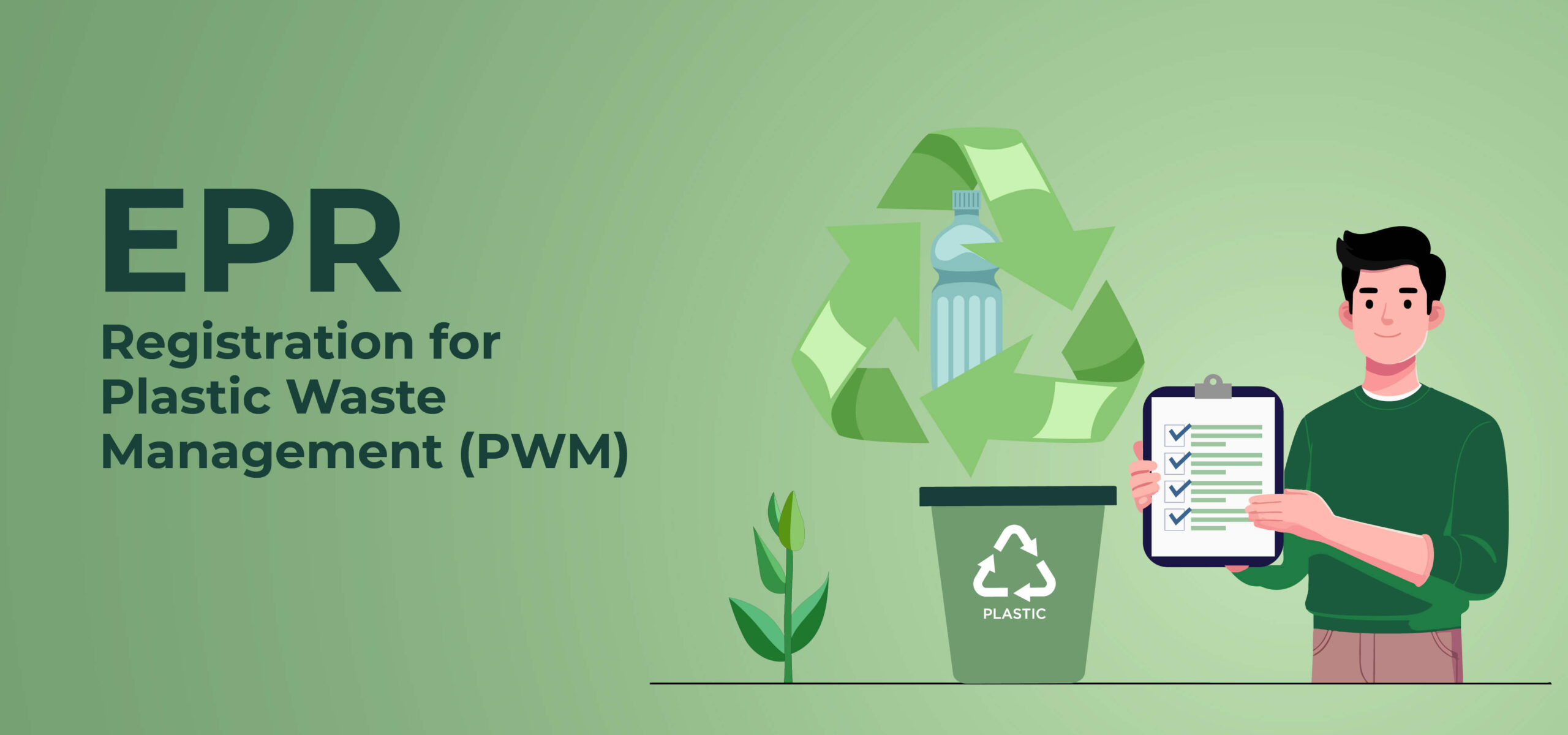
What is EPR for Plastic Waste in India? (Extended Producer Responsibility Explained)
EPR for plastic (Extended Producer Responsibility) is a mandatory regulatory framework under India’s Plastic Waste Management Rules, 2016. It requires all Producers, Importers, and Brand Owners (PIBOs) who use or sell plastic packaging in India to register with the Central Pollution Control Board (CPCB), declare annual plastic consumption targets, and ensure a minimum percentage of that plastic is collected and recycled each year. Non-compliance attracts Environmental Compensation (EC) fines and legal action.
EPR is applied to a broad array of stakeholders handling plastic packaging, which includes:
- Producers who produce plastic packaging
- Importers of plastic packaged products in India
- Brand owners with products packaged in plastic material
To dive deeper into the concept and global context of EPR, read our detailed guide on Extended Producer Responsibility (EPR).The regulation framework also aligns with broader goals of sustainable development, resource efficiency, and circular economy promoted by the Environment Forest and Climate agenda at both national and international levels.
Legal Framework – Plastic Waste Management Rules, 2016 (Amended 2022, 2024 & 2026)
EPR for plastic waste in India is governed by the Plastic Waste Management (PWM) Rules, 2016, notified by the Ministry of Environment, Forest and Climate Change (MoEF&CC). The rules were significantly strengthened through the PWM Amendment Rules, 2022, which introduced mandatory EPR targets, the centralized CPCB portal, and Environmental Compensation for non-compliance.
Further amendments in 2024 expanded the definition of “importer” to include importers of plastic raw materials — resins, pellets, and intermediate materials — and in March 2026 (G.S.R. 237(E)), the MoEF&CC notified the Plastic Waste Management (Amendment) Rules, 2026, introducing defined End-of-Life (EOL) categories, mandatory recycled content labelling under IS 14534:2023, and phased recycled content targets applicable from FY 2025–26.
The Central Pollution Control Board (CPCB) administers EPR compliance at the national level through the Centralized EPR Portal for Plastic Packaging (eprplastic.cpcb.gov.in), while State Pollution Control Boards (SPCBs) handle state-level oversight.
Who Needs EPR Plastic Registration? Producers, Importers & Brand Owners (PIBOs) Explained
- Manufacturers of plastic packaging or plastic products
- Importers of plastic raw material or plastic packaged products
- Brand Owners (PIBOs) with products packaged in plastic
- Plastic Waste Processors like recyclers, aggregators, and waste management firms
Note: If you are a PIBO in India, you need to adhere to EPR amended by Ministry of Environment Forest, and Climate Change (MoEFCC). If you don’t, legal action will be taken against you and stop business.
Even small and medium-sized enterprises and start-ups handling plastic packaging must check whether EPR registration would be applicable to them.
[Please watch our video in Hindi below to understand the basic concepts of EPR for Plastic Waste and answer an important question – Who should opt for this registration and why?}
Types of Plastic Covered Under EPR – Category I to IV
EPR obligations are assigned category-wise. Understanding which category your plastic falls under determines your registration type, recycling targets, and permissible End-of-Life (EOL) options:
Category I – Rigid Plastic Packaging: Bottles, jars, containers, caps, lids, crates, trays. Highest recyclability. Recycling is the primary mandated route.
Category II – Flexible Plastic Packaging (Single Layer): Carry bags, pouches, wrappers, films made from a single layer of plastic material. Includes LDPE, LLDPE films.
Category III – Flexible Plastic Packaging (Multi-Layer / Multi-Material): Laminated pouches, sachets, multilayer packaging combining plastic with paper, metal, or other non-plastic. Most challenging category for recycling.
Category IV – Plastic Sheets and Covers: Thermocol (EPS) boxes, plastic sheets used in agriculture, construction, or packaging. Includes non-packaging plastic commodities notified by CPCB.
Each PIBO must declare their plastic consumption and EPR targets category-wise when registering on the CPCB EPR Portal. Targets are calculated separately for each category and must be fulfilled through corresponding Recycling Certificates issued by registered Plastic Waste Processors (PWPs).
Types of Plastic Packaging Under EPR — Category-Wise Targets & Obligations
All plastic packaging regulated under EPR is divided into four categories. Understanding which category your packaging falls under determines your collection, recycling, and recycled content targets. Here is a complete reference table:
| Category | Type | Examples | Collection Target (2023–24 onwards) | Recycled Content Mandate (from FY 2025–26) |
|---|---|---|---|---|
| Cat I | Rigid plastic packaging | PET bottles, HDPE containers, PP tubs, crates | 100% | 30% (rising to 60% by 2028–29) |
| Cat II | Flexible plastic packaging (single layer) | Pouches, sachets, carry bags, shrink films | 100% | 10% (rising to 25% by 2028–29) |
| Cat III | Multi-layer flexible plastic | Laminates, metalized packaging, multilayer films | 100% | 5% (rising to 12% by 2028–29) |
| Cat IV | Compostable / biodegradable plastic | Certified compostable bags, bio-based packaging (IS 17088) | 100% | As per IS 17088 certification |
If your product uses multiple types of packaging across categories — for example, a rigid HDPE bottle (Cat I) with a flexible multilayer pouch (Cat III) inside — you need to register and report targets separately for each category.
Category IV (compostable plastics) requires certification under IS 17088. Only CPCB-approved certification bodies can issue this certification. Regular plastic labelled as ‘biodegradable’ without IS 17088 certification does not qualify for Category IV treatment and is still subject to Category I, II, or III obligations.
Environmental Compensation (EC) & Penalties for Non-Compliance with EPR Plastic Rules
Non-compliance with EPR plastic obligations can result in significant financial and legal consequences under the Environment (Protection) Act, 1986 and the Plastic Waste Management Rules:
Environmental Compensation (EC): If a PIBO fails to meet its annual recycling targets, CPCB levies an EC fine. This is calculated based on the unfulfilled quantity. Paying EC does not waive the liability — the unfulfilled target is carried forward.
Carry-Forward Period: Unfulfilled EPR targets are carried forward for up to three financial years. If fulfilled within Year 1: 75% EC refund. Year 2: 60% refund. Year 3: 40% refund. After 3 years: full EC is forfeited.
Customs Clearance Block (Since July 2025): CBIC has mandated that importers without a valid EPR plastic registration will have their consignments blocked at customs. This applies to importers of plastic raw materials (resin, pellets, granules, films, preforms) and importers of plastic-packaged goods.
Suspension of Operations: CPCB has the authority to suspend or cancel EPR registration for persistent non-compliance, which effectively halts your ability to legally market plastic-packaged products in India.
Legal Prosecution: Willful non-compliance can attract prosecution under Section 15 of the Environment (Protection) Act — up to 5 years imprisonment or fines up to ₹1 lakh per day of violation.
Latest EPR Plastic Regulatory Updates (2026–2027) - Last Updated: April 2026
The EPR plastic framework in India has seen significant regulatory activity. Staying current is critical for businesses to remain compliant:
March 2026 — PWM Amendment Rules 2026 (G.S.R. 237(E)):
MoEF&CC notified updated End-of-Life definitions covering co-processing, Waste-to-Energy, waste-to-oil, road construction, and feedstock conversion (now treated as recycling). Mandatory labelling for recycled plastic under IS 14534:2023 introduced. Recycled Content Targets applicable from FY 2025–26.
Annual Return Deadline Extended (June 2025):
MoEF&CC extended the FY 2024–25 annual return filing deadline for PIBOs and PWPs to September 30, 2025, providing compliance relief.
CBIC Customs Mandate — July 2025 (Instruction No. 21/2025):
CBIC directed customs authorities to verify EPR portal registration for all importers of plastic raw materials (including resins, pellets, preforms) at the time of customs clearance. Consignments without proof of EPR registration are to be held.
Expanded Importer Definition — 2024 Amendment:
The 2024 amendment to PWM Rules expanded the definition of “importer” to explicitly include importers of plastic raw material (resin, pellets) or intermediate materials (films, preforms) used in manufacturing plastic packaging — not just importers of finished plastic-packaged products.
This page is updated regularly. Bookmark it or subscribe to our EPR compliance alerts to stay informed.
Plastic Waste Management (Amendment) Rules, 2026 — What Has Changed
On 31 March 2026, the Ministry of Environment, Forest and Climate Change (MoEFCC) notified the Plastic Waste Management (Amendment) Rules, 2026 (vide G.S.R. 237(E)). These rules came into immediate effect and represent the most significant update to India’s EPR plastic framework since the 2022 guidelines. If you are a PIBO — producer, importer, or brand owner — these changes directly affect your compliance obligations for FY 2025–26 and beyond.
Here is a breakdown of all the key changes:
1. Mandatory Recycled Content in Plastic Packaging
For the first time, PIBOs are now legally required to use a minimum percentage of recycled plastic content in their packaging — not just collect and recycle waste, but actively incorporate recycled material into new packaging. The targets are phased as follows:
| Plastic Category | FY 2025–26 | FY 2026–27 | FY 2027–28 | FY 2028–29 |
|---|---|---|---|---|
| Category I – Rigid Plastic Packaging | 30% | 40% | 50% | 60% |
| Category II – Flexible Plastic (single layer) | 10% | 15% | 20% | 25% |
| Category III – Multi-layer Flexible Plastic | 5% | 8% | 10% | 12% |
| Category IV – Compostable / Biodegradable Plastic | As per IS 17088 | As per IS 17088 | As per IS 17088 | As per IS 17088 |
Recycled plastic used must comply with IS 14534:2023 (BIS standard for recycled plastics). For food-contact packaging, FSSAI norms also apply. Companies must declare compliance when filing annual returns.
2. Carry-Forward Mechanism for Unmet Targets
PIBOs that fail to meet their EPR recycling targets for FY 2025–26 will not face immediate full penalties. The 2026 amendment introduces a structured carry-forward rule:
| Situation | Carry-forward allowed? | EC Refund on fulfilment |
|---|---|---|
| Target shortfall in FY 2025–26 | Yes — up to 3 subsequent years (must clear ≥1/3 per year) | 75% refund if cleared in Year 1 |
| Shortfall cleared in Year 2 | Allowed | 60% EC refund |
| Shortfall cleared in Year 3 | Allowed | 40% EC refund |
| Shortfall still uncleared after 3 years | No — full EC applies |
0% — full Environmental Compensation payable |
Paying Environmental Compensation does not discharge the underlying recycling obligation. The unfulfilled target must still be physically met through certified recyclers or purchase of EPR certificates.
3. Tradable EPR Certificate Exchange System
The 2026 rules formally codify a market-based system where:
- PIBOs who exceed their EPR targets generate surplus EPR certificates.
- PIBOs unable to meet their own targets can purchase these certificates from surplus holders or from Plastic Waste Processors (PWPs).
- All certificate purchases and transfers are recorded on the CPCB EPR portal — the system is fully auditable.
- This does not remove your individual obligation — it transfers recycling responsibility to a certified, registered recycler.
4. Expanded End-of-Life (EOL) Disposal Definition
The 2026 amendment broadens what counts as valid End-of-Life disposal for EPR compliance purposes. The following processes now qualify:
- Co-processing: Using plastic waste as an alternative fuel in cement kilns and similar industrial processes.
- Waste-to-Energy (WtE): Generating electricity or heat from plastic waste in authorised plants.
- Waste-to-Oil: Pyrolysis-based conversion of plastic waste to fuel oil — now treated as recycling for EPR purposes.
- Road Construction: Use of plastic waste in bituminous road laying, per existing NHAI/MoRTH guidelines.
- Feedstock Conversion: Depolymerisation processes that convert plastic back into chemical feedstocks — classified as recycling.
5. Mandatory Labelling for Recycled Plastic Content
Any plastic packaging that uses recycled content must now carry a declaration on-pack indicating the recycled content percentage. This declaration must be consistent with IS 14534:2023. Food packaging with recycled content must separately comply with FSSAI guidelines. Both requirements apply from FY 2025–26.
6. State-Level Monitoring Committees
State governments are now mandated to constitute State-Level Monitoring Committees to oversee EPR implementation at the ground level. Local bodies and Panchayat Raj institutions have also been given enforcement roles. This means compliance scrutiny is no longer limited to CPCB and SPCBs — local bodies can now act on non-compliance.
Annual EPR Plastic Recycling Targets: Category-wise & Year-wise Obligations (FY 2024–25 to 2027–28)
Under EPR for plastic rules, PIBOs must meet increasing annual recycling targets. Below are the mandatory recycling percentages by category:
| Plastic packaging category | 2025-26 | 2026-27 | 2027-28 | 2028-29 and onwards |
|---|---|---|---|---|
| (1) | (2) | (3) | (4) | (5) |
| Category I | 30 | 40 | 50 | 60 |
| Category II | 10 | 10 | 20 | 20 |
| Category III | 5 | 5 | 10 | 10 |
EPR Plastic Registration for Importers: CBIC Customs Mandate & 2026–2027 Rules
As of July 2025, CBIC has mandated that all importers of plastic raw materials — including resin, pellets, films, and preforms — must present proof of EPR plastic registration on the CPCB portal at the time of customs clearance. This is in addition to the existing requirement for importers of products wrapped in plastic packaging. Without a valid EPR certificate, your consignment will not clear customs.
- Importers of plastic raw materials (resin, pellets, granules)
- Importers of intermediate plastic materials (films, preforms, laminates)
- Any importer whose goods are packed in plastic packaging
- E-commerce importers receiving goods with plastic outer packaging
Mandatory QR Code & Barcode Labelling on Plastic Packaging
Effective July 1, 2025, all plastic packaging sold or distributed in India must carry on-pack labelling as mandated under Rule 11 of the Plastic Waste Management Rules (as amended). This is a live regulatory requirement — non-compliant packaging can be flagged during CPCB audits or state-level inspections.
Here is what must appear on your plastic packaging
| What must appear on pack? | Format | Applicable From |
|---|---|---|
| PIBO’s registered name | Text or embedded in QR/barcode | July 1, 2025 |
| CPCB EPR Registration Number | QR code, barcode, or unique number | July 1, 2025 |
| Category of plastic used (Cat I, II, III, or IV) | Text or encoded in QR | July 1, 2025 |
| Recycled content % (if any recycled material used) | Text label — must comply with IS 14534:2023 | FY 2025–26 (2026 Amendment) |
| Food-contact compliance (for food packaging) | FSSAI norms compliance declaration | FY 2025–26 (2026 Amendment) |
How to Generate Your CPCB Registration Number for Labelling
Your CPCB EPR Registration Number is issued once your registration is approved on the centralized CPCB EPR portal (eprplastic.cpcb.gov.in). This number must be:
- Printed directly on the packaging, OR
- Encoded in a scannable QR code or barcode affixed to the packaging, OR
- Displayed on the product label where direct packaging printing is not feasible.
If you are an importer whose goods arrive in foreign packaging, you must ensure that either the overseas manufacturer has affixed CPCB-compliant labelling before shipment, or you affix a compliant sticker/label before the goods are sold in India. This is a common compliance gap for importers — contact Afleo to assess your specific situation.
EPR Plastic Compliance Deadlines — Filing Calendar 2025–26
Staying compliant with EPR for plastic is not a one-time task — it requires ongoing filing and reporting. Missing deadlines can trigger CPCB notices, EC charges, or — for importers — blocked customs clearances. Here are all the key dates you need to track:
| Filing Type | Due Date | Filed With | Consequence of Missing |
|---|---|---|---|
| Annual Return (EPR compliance) | 30 June each year (FY 2024–25 extended to 30 Sept 2025) | CPCB portal | Show cause notice, EC charges, import clearance blocked |
| Half-yearly Return | 31 October each year | CPCB portal | Registration suspension risk |
| EPR Certificate / Registration renewal | Before expiry of 5-year term | CPCB / SPCB | Cannot legally import or sell; customs clearance fails |
| Customs clearance proof (importers) | At time of each import consignment | CBIC / Customs officer | Consignment held / refused clearance |
For FY 2024–25, MoEFCC extended the annual return deadline to 30 September 2025. Always check the CPCB portal and official notifications for any further extensions. Afleo monitors all such notifications and proactively informs clients.
Afleo provides a compliance calendar service for all registered clients — you receive reminders well in advance of every filing deadline, so you are never caught off guard.
The registration process for EPR compliance is carried out online on the CPCB portal. The following is a step-by-step process:
- Go to the CPCB Online Portal for registering for EPR & Click on Register.
- Complete the registration form with company details, plastic consumption data, and waste management strategy.
- Upload supporting documents, such as:
- Company PAN card
- GST registration certificate
- Authorization certificate (where necessary)
- Plastic product and packaging utilized details
- Pay the registration fee as required by the CPCB.
- Submit the application and wait for verification.
For an in-depth look at each stage of the process, check out our complete guide on the EPR registration process in 2026.
EPR Plastic Registration Fees (Government Fee Schedule)
- The registration procedure would typically be between 7 to 15 working days.
- Government fees will depend on category and the amount of plastic treated. Please see the current fee table on the CPCB portal.
Common Registration Errors to Avoid
- Insufficient or faulty documentation
- Missing or outdated authorization certificates
- Insufficient reporting of plastic intake data
- Late payment of the fee
Avoid such errors for a hassle-free registration.
EPR Registration Fees
Government fee depends on the Plastic Waste Generation volume:
| Plastic Waste (MT) | Fee (INR) |
|---|---|
| Less than 1,000 MT | ₹10,000 |
| 1000 to 10000 MT | ₹10,000 |
| More than 10,000 MT | ₹50,000 |
- Note: Resubmission charges apply if corrections are required after initial rejection.
EPR Certificate for Plastic Waste Management
A Government Certificate from the Central Pollution Control Board (CPCB) or the State Pollution Control Board (SPCB), as applicable. It verifies that the brand owner or producer has successfully registered and is in line with EPR norms.How to Get EPR Certificate
- Register EPR on the CPCB portal.
- Post documents and fees.
- On approval, download the EPR Certificate online.
Validity & Renewal
- The EPR certificate is generally for 5 years.
- Renewal before expiry is a must for keeping legal compliance in effect.
- Renewal entails uploading fresh information about plastic use and waste management practices.
Significance of EPR Certificate
- Complies with the aspect of legal compliance at the time of inspection.
- Is compulsory for availing government tenders and contracts.
- Builds brand image as a responsible and environmentally friendly company.
Compliance Obligations under EPR for Plastic
After registration, PIBOs must fulfil the following key requirements on an annual basis:
- Achieve government-specified levels of recycling, which are minimum levels of plastic waste to be recycled and collected.
- Use only registered recyclers or plastic waste processors to guarantee proper handling of wastes.
- File annual returns showing the quantity of plastic that was generated, recycled, and disposed.
- Ensure traceability and documentation of all plastic waste transactions.
- Adhere to recent trends, such as tougher regulations on single-use plastics and multi-layer packs.
Learn more about how EPR targets are calculated and enforced in our article on EPR targets for Producers, Importers, and Brand Owners.
The 2022 changes lean more towards greater transparency and greater accountability along the plastic waste value chain.
Penalties for Non-Compliance with EPR Plastic Rules
Non-compliance with EPR regulations or failure to register can entail stringent action under the Environment Protection Act:
- Fines ranging from ₹25,000 to ₹5 lakh according to the severity and frequency of non-conformity.
- Suspension or cancellation of registration and consequent loss of business.
- Legal action involving imprisonment in serious cases.
- Loss of market faith and even a ban on business.
| Violation | Penalty / EC | Consequence |
|---|---|---|
| Not registered on CPCB EPR portal | Business cannot legally operate | Stoppage of business |
| Missing recycling targets (Year 1) | EC levied; 25% refund if target met within 1 year | EC forfeited after 3 years |
| Import without EPR registration | Goods held at customs; import license risk | Clearance denied |
Compliance with EPR regulations not only needs to be done to escape penalties but also to foster a green environment.
How We Facilitate EPR Compliance
We at Alfeo provide end-to-end solutions to make EPR easier for you:
- End-to-end facilitation of EPR registration to facilitate timely and accurate submission.
- Documentation and report facilitation to simplify annual returns.
- Coordination with registered recyclers and agencies to manage plastic waste with ease.
- EPR credit purchase and traceability support, allowing maximum compliance benefit.
Our clients have been able to achieve government targets and maintain business continuity with our expert guidance.
“Alfeo made our EPR registration and compliance such an effortless process. Their staff did all the paperwork and helped ensure that the report was submitted on time.” – Client Testimonial
Still Confused About EPR Targets? This 1-Minute Video Breaks It Down
Who are We and Why Choose Us
We at Afleo, are India’s leading consultants for:
- Plastic Waste EPR
- Battery Waste EPR
- E-Waste Compliance
- Waste Tyres EPR
Why Afleo:
- Fastest turnaround time
- End-to-end compliance support
- Dedicated consultant
- Access to certified PWPs
- Accurate return filing
- Legal and regulatory updates
- Fastest turnaround time
- End-to-end compliance support
- Dedicated consultant
- Access to certified PWPs
- Accurate return filing
- Legal and regulatory updates
How to Apply for EPR Plastic Registration on the CPCB Portal: Step-by-Step Guide
FAQ’s
What is EPR in Plastics?
EPR refers to Extended Producer Responsibility, where producers, importers, and owners of brands are held responsible for managing plastic waste because of their products.
Who is eligible for EPR certificate?
Any manufacturer, importer, or brand owner dealing with plastic packaging and registered under Plastic Waste Management Rules is eligible to obtain an EPR certificate.
Who Needs EPR Registration Under Plastic Waste Management Rules?
All Indian producers, importers, brand owners, and plastic waste treatment units must get registered under EPR for handling plastic packaging or products.
What Documents Are Required for EPR Registration?
Normally required documents are PAN card, GST certificate, authorisation certificates, and full details of plastic products and packaging.
What Are the Government Fees for EPR Registration?
Fees vary based on quantum and type of plastic handled; see the CPCB website for the up-to-date fee schedule.
What Is the Validity of an EPR Certificate? Is Renewal Required?
EPR certificates have a shelf life of 5 years. Pre-expiry renewal is mandatory to ensure continued compliance.
Can Small Businesses or Low-Volume Importers Skip EPR Registration?
No, EPR compliance is obligatory for every PIBO, whether big or small or quantity of plastic utilization, although smaller organizations shall have proportionate requirements.
How to renew EPR registration in India?
Renewal is online via the CPCB portal by filing new usage and recycling data and paying associated fees.
Is There a Penalty for Non-Compliance with EPR in India?
Yes, penalties involve fines, suspension of registration, legal proceedings, and even imprisonment based on the seriousness of the offence.
We at Alfeo facilitate your business to deal with the intricacies of EPR for plastic with ease. Contact us today for professional guidance on registration, compliance, and certification.
What is EPR plastic registration?
EPR plastic registration is the process by which Producers, Importers, and Brand Owners (PIBOs) dealing in plastic packaging register on the CPCB’s centralized EPR portal. Upon approval, they receive an EPR Certificate that authorizes them to legally sell, import, or market plastic-packaged products in India and sets annual recycling targets they must fulfill.
Is EPR registration mandatory for all businesses?
Yes — EPR registration is mandatory for all Producers, Importers, and Brand Owners handling plastic packaging in India. The only exemption is for Brand Owners in the Micro and Small enterprise category. Manufacturers of plastic packaging and all importers — including importers of plastic raw materials — must register regardless of turnover.
How long does EPR plastic registration take?
Typically 15–20 working days from the date of complete document submission on the CPCB EPR portal, assuming no discrepancies. Having a consultant verify documents before submission reduces the risk of rejection and re-submission delays.
What happens if I import without EPR plastic registration?
Since July 2025, CBIC customs authorities are required to block clearance of plastic raw material imports unless the importer can show proof of EPR registration on the CPCB portal. Non-compliant importers face customs holds, fines, and potential legal proceedings.
Does EPR registration need to be renewed?
For plastic waste, EPR registration on the CPCB portal is generally a one-time registration — it does not have a fixed expiry date. However, PIBOs must file Annual Returns each financial year and fulfill their declared targets. Failure to comply can lead to cancellation of registration.
What are the plastic EPR categories?
EPR for plastic covers four categories: Category I (rigid plastic packaging), Category II (flexible single-layer plastic), Category III (flexible multi-layer/multi-material packaging), and Category IV (plastic sheets and covers including thermocol). Targets and permitted disposal routes differ by category.
Can I fulfill my EPR plastic targets without collecting plastic myself?
Yes. PIBOs have multiple options to meet targets: (a) directly collect plastic waste and submit it to registered PWPs, (b) purchase Recycling Certificates directly from registered PWPs, (c) procure EPR credits from local bodies or other registered PIBOs with surplus credits, or (d) avail EPR credit trading services through consultants like Afleo who maintain a network of registered PWPs.
Is EPR plastic registration compulsory for small importers or MSMEs?
Yes — there is no turnover or volume exemption for importers or producers. Only Brand Owners in the Micro and Small Enterprise (MSME) category are exempt from EPR obligations. All importers regardless of size must register and comply. Ignoring this can result in your consignments being held at customs.
What is the difference between CPCB registration and SPCB registration for EPR plastic?
If your business operates in more than two states or Union Territories, you must register centrally with CPCB. If your operations are limited to one or two states, registration is done with the relevant State Pollution Control Board (SPCB) or Pollution Control Committee (PCC). In both cases, the online application is submitted through the centralized CPCB EPR portal.
What are the recycling targets for plastic packaging in 2025–26?
The collection and recycling target is 100% across all plastic categories (I–IV) from FY 2023–24 onwards. In addition, from FY 2025–26, there are mandatory recycled content targets — for example, rigid plastic packaging (Category I) must contain at least 30% recycled material, rising to 60% by FY 2028–29.
Can I buy EPR certificates instead of physically recycling plastic waste?
Yes. If you are unable to meet your own recycling targets, you can purchase EPR certificates from other PIBOs or Plastic Waste Processors (PWPs) who have generated surplus certificates by exceeding their obligations. All such transactions are recorded on the CPCB portal. This does not eliminate your obligation — it transfers responsibility to a certified recycler.
What happens if I miss the EPR plastic return filing deadline?
Missing the annual return deadline (30 June, or any extended date notified by MoEFCC) can result in show-cause notices from CPCB, suspension of registration, Environmental Compensation charges, and — for importers — blocked customs clearance on future consignments. Afleo monitors filing deadlines for all clients and ensures timely submissions.
Do I need a separate EPR registration if I am both an importer and a brand owner?
Yes, if you are both an importer and a brand owner, you technically need registrations under both categories. However, CPCB allows liability transfer — if you register as a brand owner and declare the imported plastic quantities, the importer liability can be set off, resulting in zero separate liability as an importer. Afleo can structure your registration to minimise double compliance.
Is QR code labelling on plastic packaging now mandatory?
Yes. From July 1, 2025, all plastic packaging sold in India must display the PIBO’s name, CPCB EPR registration number, and other required information on-pack via a QR code, barcode, or unique number — under the amended Rule 11 of the Plastic Waste Management Rules. Non-compliant packaging can attract regulatory scrutiny during audits.
Q: What are the key changes under the Plastic Waste Management (Amendment) Rules, 2026?
The 2026 Amendment Rules (notified 31 March 2026, G.S.R. 237(E)) introduced: (1) mandatory recycled content targets for all plastic packaging; (2) a formal carry-forward mechanism allowing unfulfilled targets from FY 2025–26 to be cleared over 3 years; (3) a tradable EPR certificate exchange system; (4) expanded definition of End-of-Life (EOL) disposal including waste-to-energy and waste-to-oil; and (5) labelling compliance mandates for recycled plastic under IS 14534:2023.
Are export-oriented units (EOUs) required to register for EPR plastic?
No. Export-oriented units (EOUs) are currently exempt from fulfilling EPR obligations under the Plastic Waste Management Rules, as their products and packaging are not sold in the Indian market.