
Factory Stuffing / Self Sealing Permission
List of Services
AFLEO Consultants DGFT Regional office
- IEC and its modification/Yearly Update/IEC Surrender.
- Revoke IEC from DEL, Suspension, Cancellation etc / Merger/Demerger of IEC’s.
- DGFT Identity card.
- Advance License - Issuance and Redemptions
- Export Promotion Capital Goods (EPCG) License – Issuance and Redemptions
- Duty-Free Import Authorization (DFIA)
- Remission of Duties or Taxes on Export Product (RoDTEP)
- Merchandise Exports from India Scheme (MEIS)
- Services Exports from India Scheme (SEIS)
- Rebate of State and Central Taxes and Levies (RoSCTL)
- Transport and Marketing Assistance (TMA)
- Certificates of Origin (COO) – SAPTA, APTA, ISLFTA, GSTP, India–Dubai CEPA, etc.
- Import Monitoring System (IMS) – Steel IMS, Coal IMS, Copper/Aluminium IMS, Chip IMS
- Deemed Export Benefits – Apply for Refund of TED/DBK/Brand rate Fixation.
- Star Export House Certificate.
- Free Sale & Commerce Certificate, End User Certificate.
- Enforcement cum Adjudication Proceedings at RA Mumbai.
- E-RCMC Certificate from DGFT – APEDA, FIEO, EEPC, PHARMEXCIL, CHEMEXCIL ETC.
- Gems & Jewelry Schemes.
- Application for Interest Equalization Scheme.
- REX Registration.
- FREE SALE AND COMMERCE CERTIFICATE.
- Abeyance Cases for IEC’s in DEL.
- END USER CERTIFICATE.
DGFT HQ, New Delhi
- Norms Fixation - Handling 25+ Norms Fixation cases every month across various Product groups. (Engineering, Pharmaceutical, Chemical, Textiles & Leather, Plastic & Rubber, Food, Sports & Misc. products)
- Policy Relaxation Committee (PRC Matters) - Proudly representing 20+ cases every month.
- EPCG Committee Approvals - Handling 10+ complex cases every month
- Permission for Restricted/Negative list of Import Items & Export Items - Experience in Handling 100+ cases till date.
- Registration Certificates for Export & Import Items.
- SCOMET Licenses.
- TRQ (Tariff Rate Quotas)
- Appeal Matters under FTP.
Custom Related Services
- AA/EPCG/DFIA License Registration.
- Bond & Bank Guarantee (BG) Cancellation of EPCG/Advance License.
- ICEGATE Registration.
- Refund under Section 74.
- Pending Duty Drawback from Customs.
- Factory stuffing– Self-sealing permission. [FSP]
- Pending IGST Refund from Customs.
- Removal of IEC from the Alert list of Customs.
- GST Services – Refund of ITC from GST.
- Authorized Economic Operator (AEO T1, T2 & T3) certification.
- Reply & Follow-up of Customs Notices if any.
- GST Services – Refund of GST for Service Exporters.
- AD Code/IFSC Registration.
- SIIB Matters (Special Investigation and Intelligence Branch)
- SVB Matters.
- Registration Procedures for First-time Importers/ Exporters
- DPD/DPE Registration.
Other Certification:
- All Types of Digital Signature Certificates.
- Health Certificate for Export Products
- EPR Certification for Producers, Importers and Brand owners.
- Phytosanitory Certificate.
- BIS Certification.
- Banking & RBI related liaison for Exporters & Importers.
AFLEO logistics
- Sea Cargo Consolidation – Import & Export
- Sea Freight Forwarding - Import & Export
- Air freight - Import & Export
- Land freight
- Warehousing
- Customs clearance
- Insurance
AFLEO Global
- Buying of scrips - MEIS / SEIS / RoDTEP / RoSCTL / DFIA
- Selling of scrips - MEIS / SEIS / RoDTEP / RoSCTL / DFIA
Find our brochure for more details:
Table of Contents
Factory Stuffing Permission (Self Sealing Permission)
- 1. What is Factory Stuffing / Self-Sealing Permission for Export?
- 2. How Does the Self-Sealing Permission Procedure Work?
- 3. Pros and Cons of Factory Stuffing / Self-Sealing - Should you opt for it?
- 4. Eligibility Criteria & Application Procedure for Self Sealing Permission
- 5. Documents Required for Self-Sealing Permission Application
- 6. How Can We Assist You in Getting Factory Stuffing / Self Sealing Permission?
- 7. Why Afleo Group?
- FAQ’s on AD code registration at Icegate:
1. What is Factory Stuffing / Self-Sealing Permission for Export?
In simple terms, Factory Stuffing / Self-Sealing Permission means that an empty container comes to your factory from the nearest ICD or main port, you stuff the goods, and seal it yourself. You don’t need to send your goods to CFS for loading. If the seal is not tampered with, no one will open your container, and it will be loaded directly onto the vessel.
Previously, the factory stuffing process was done in the presence of a jurisdictional excise officer who would check and seal your container. However, from 2018, the physical presence of the officer has been discontinued, and exporters now need to seal the container themselves with an electronic seal. This new process is called Self-Sealing Permission.
2. How Does the Self-Sealing Permission Procedure Work?
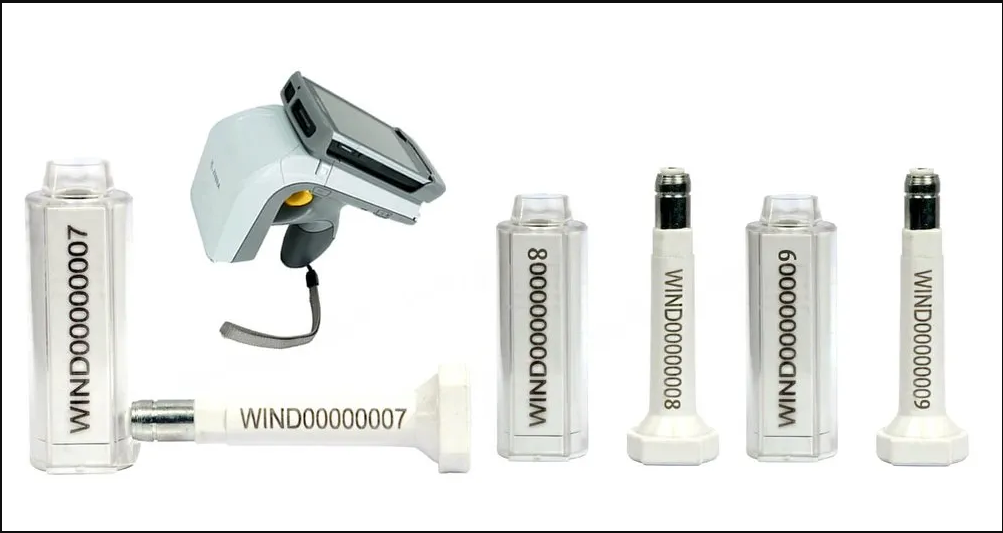
After stuffing the container, you need to attach the E-seal. During this process, you need to fill in all shipment details on the online web module/application of the E-seal vendor, such as IEC code, SB number and date, seal number, date and time of sealing, destination customs station for export, container number, truck number, etc. Once this information is entered online, it cannot be edited, so be careful when filling it out.
When your container reaches the port, a customs officer checks the E-seal with their device. If it displays a “Not Tampered” message, all further formalities are processed smoothly. This is the overall process.
Latest Update
- Circular No. 14/2026-Customs & Circular No.36/2017-Customs dated 27th March 2026,
Clarifies self-sealing permission granted to eligible exporters does not have any fixed validity period. Once approved, the facility remains valid unless it is withdrawn, suspended, or cancelled by the Customs authorities due to non-compliance or misuse.
Check out the below short video to understand What does Self Sealing Permission for export exactly mean, What are its Pros and Cons and Whether you should opt for it? Also understand what will be the eligibility criteria and the required documents to apply for it.
3. Pros and Cons of Factory Stuffing / Self-Sealing - Should you opt for it?
Pros:
- No Multiple Handling: Generally, if you stuff goods at CFS, loading/unloading happens 2-3 times, and different people handle it, increasing the risk of damage to goods.
- Cost Saving: If an ICD or main port is near your factory, you can save on CFS storage charges. The overall saving is a minimum of Rs. 2000 to 3000 per container.
- Optimization of Container Space: If your trained labor regularly stuffs the goods, they know how to do it efficiently without wasting space.
Cons:
- Long Distance from Factory to Port: If your factory is far from the port or ICD, the cost of transporting the empty container from the port or ICD to your factory will be very high, making factory stuffing unviable. Apart from this, there are no other major cons.
4. Eligibility Criteria & Application Procedure for Self Sealing Permission
All exporters who file GST returns are eligible to apply for Self-Sealing Permission. The initial validity of Self-Sealing Permission is 5 years for manufacturer exporters and 1 year for merchant exporters. After this period, they need to reapply to extend the validity.
Initially, the application for factory stuffing permission was made at the GST/Excise office. However, as per the latest rules, the application should be made at the jurisdictional Preventive Customs office of the factory or warehouse where you intend to carry out factory stuffing.
After submitting the application, a customs officer will visit the factory for inspection to check if there is sufficient space to carry out factory stuffing.
Based on the factory visit report and NOC from the jurisdictional GST office, the Preventive Customs officer will grant Self-Sealing Permission.
Once permission is granted by the Preventive Customs office, you need to register it at the respective port from where you will export.
5. Documents Required for Self-Sealing Permission Application
Some of the major documents required for the Self-Sealing Permission application include:
- A request letter.
- Annexure C and Annexure D where you need to list authorized persons who will handle the self-sealing procedure along with their Aadhaar cards, bio-data, specimen signature verified by the bank, etc.
- Common KYC documents like IEC, PAN, GST, MSME, etc.
- Copies of GSTR 1 and GSTR 3B of the last year.
- Site map with coloured photographs.
- Ownership agreement/lease deed of the factory premises or warehouse for which factory stuffing permission is required.
- Description of export goods, etc.
6. How Can We Assist You in Getting Factory Stuffing / Self Sealing Permission?
Our experts assist you in getting Factory Stuffing Permission, here is how –
- We first help you get the paperwork done for factory stuffing. So, we get customs clearance and other paperwork done on your behalf.
- We make sure you comply with all the regulations related to factory stuffing. If you are not aware, we also inform and train you in this matter.
- We ensure you use the RFID e-seal correctly to ensure the maximum safety of your cargo.
We have helped more than 250 companies get their Self-Sealing Permission and renew it.
7. Why Afleo Group?
We aim to provide very reliable services at the most competitive cost to exporters under one roof.
Social Media Presence: We strive to grow our relationships with clients by updating them about the latest notifications, circulars, and amendments in foreign trade policies on all social networking sites.
24/7 Telephonic Service: We offer fast services to clients who can’t wait until morning to fix a problem. We are just a phone call away. Clients can call or drop a mail, and we try to reach them as soon as possible.
FAQ’s on AD code registration at Icegate:
How do you get factory stuffing permission?
What is factory de-stuffing?
Factory de-stuffing is unloading the cargo at the factory premises.
What are factory de-stuffing and dock de-stuffing?
Factory de-stuffing is when you offload the cargo at the factory, while dock de-stuffing is when you do the same at the dock.
What is the difference between factory stuffing and self-sealing?
No, there are no local distributors who retail the e-seals locally. Owing to security reasons, all orders for e-seals are received online and delivered to the mentioned address.
Is there any minimum/maximum limit on the order of e-seals?
No, there are no minimum or maximum limits on the order of e-seals. However, these e-seals are usually available in a box of 20-30 e-seals, and you cannot buy them loose.
Is IEC mandatory to buy e-seals?
Yes, IEC is compulsory when purchasing e-seals.